 नेपालब्रिटेन संवाददाता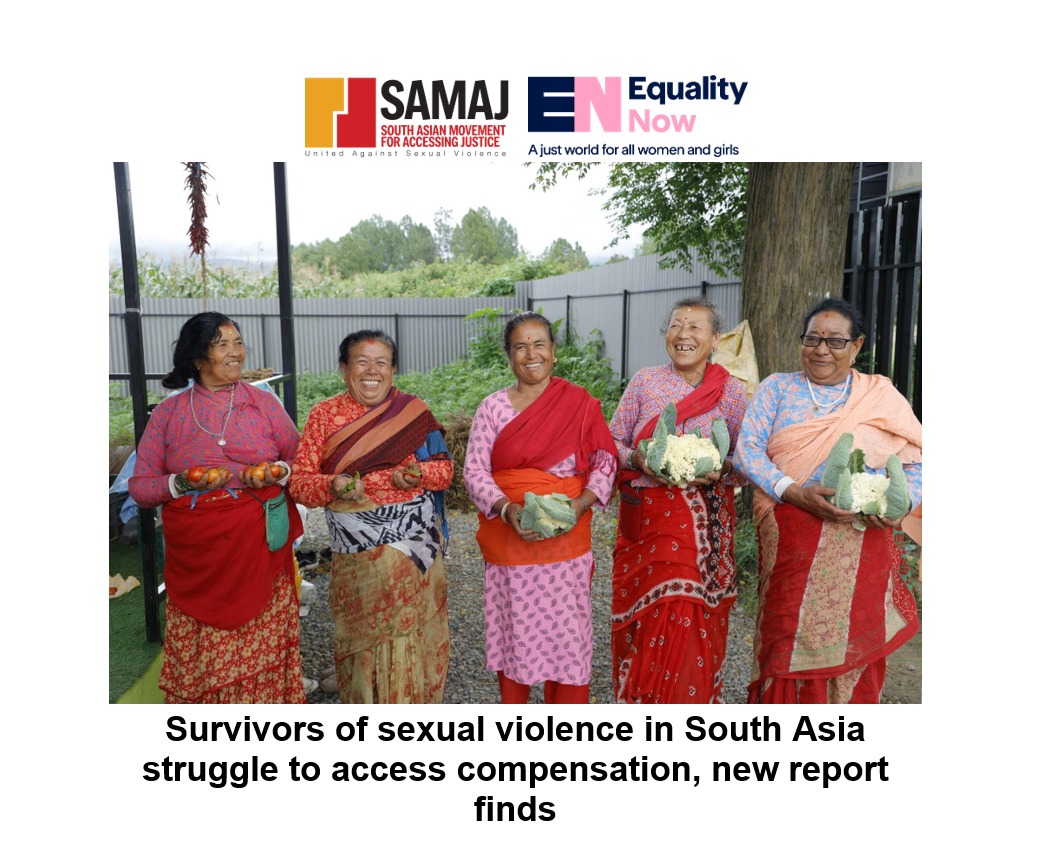
Kathmandu: A regional study report on access to compensation for survivors of sexual violence in South Asia has been released. The report was launched simultaneously on 22 July in Nepal, India, Bangladesh, Pakistan, Sri Lanka, and the Maldives by the South Asian Movement for Accessing Justice (SAMAJ).
The report is based on research conducted by SAMAJ, a regional network comprising 27 member organizations across South Asia. It examines the status of compensation mechanisms, access to justice, and legal frameworks for survivors of sexual violence throughout the region. Equality Now serves as the Secretariat of SAMAJ, while the Forum for Women, Law and Development (FWLD) represents Nepal as a member organization.
The report provides a comprehensive review of compensation systems, legal provisions, and their practical implementation for survivors of sexual violence in Bangladesh, India, the Maldives, Nepal, Pakistan, and Sri Lanka. It concludes that access to justice and compensation for survivors remains a significant challenge across most South Asian countries.
According to the report, Nepal’s Crime Victim Protection Act, 2018 (2075 B.S.) provides one of the most comprehensive legal frameworks for the protection of Survivors of Sexual Violence’ rights in South Asia. However, survivors of conflict-related sexual violence continue to face barriers in obtaining effective reparations and compensation.
The study identifies Nepal as one of only two countries in South Asia demonstrating good practices that other countries can learn from in protecting the rights of survivors of sexual violence. It highlights Nepal’s provision allowing the Victim Relief Fund to provide compensation when perpetrators are unable or unwilling to pay, recognizing this as a significant achievement. According to the report, this mechanism reduces survivors’ dependence on a criminal conviction before becoming eligible for compensation.
Despite these positive provisions, the report notes that procedural complexities, the lack of interim financial assistance, and difficulties in accessing justice continue to push many survivors toward informal or coercive settlements. These challenges are particularly severe for survivors from marginalized communities.
The report further reveals that in Bangladesh, courts awarded compensation in only 6.8 percent of the rape cases reviewed. It also notes the absence of a national victim compensation fund.
In Pakistan, although judges have broad discretion to award compensation, many survivors still receive no compensation even after perpetrators are convicted.
In India, compensation is not directly linked to a criminal conviction; however, the implementation of victim compensation schemes varies considerably across different states.
In the Maldives, forensic services, safe shelters, and legal aid are available only in limited urban areas, creating significant geographical barriers for survivors living in remote locations.
Similarly, the report concludes that survivors of sexual violence in conflict-affected areas of Sri Lanka continue to experience considerable difficulties in accessing assistance, rehabilitation, and reparations.
Launching the report, SAMAJ called upon South Asian governments, development partners, and civil society organizations to take concrete measures to establish effective compensation mechanisms for survivors of sexual violence.
The campaign particularly urged Bangladesh, Pakistan, and the Maldives to establish national victim compensation funds that operate independently of criminal convictions, enabling survivors to receive timely relief and compensation without having to wait for perpetrators to be convicted.
The report also recommends the establishment of interim compensation mechanisms to ensure that survivors receive timely emergency assistance for medical treatment, psychosocial counselling, and transportation costs.
Furthermore, it calls on South Asian governments to ensure the effective enforcement of court-ordered compensation, publish annual data on compensation awards and payments, harmonize guidelines governing victim relief funds to reduce disparities, and make information on compensation procedures available in local languages and accessible formats.
Finally, the report recommends that Nepal and Sri Lanka develop clear legal provisions on reparations for survivors of conflict-related sexual violence without delay.